Showing posts sorted by relevance for query "pop-up card butterfly". Sort by date Show all posts

fantasy forest

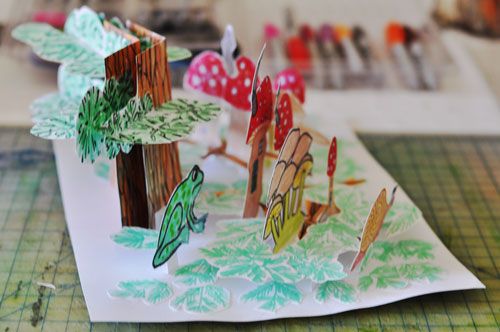
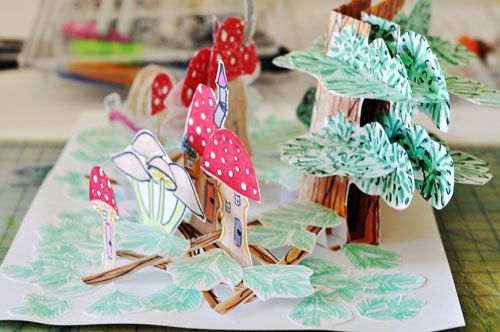
A tree trunk is build on a V mechanism design. Flat branches are passed through the tree trunk and fixed parallel to the flat opened card. The double V shape tree trunk closes when the card is closed which angles the trunk tucked into the center of the card and collapses the inserted branches like the wings of a butterfly folding. The V shape is pulled apart when the card is opened which lifts the tree trunk up into position and drags along everything that is attached to it.

Content is drawn in anticipation of a platform to be built upon posts that present upright forward-facing content and that will be attached by an elevated platform to the tree trunk.
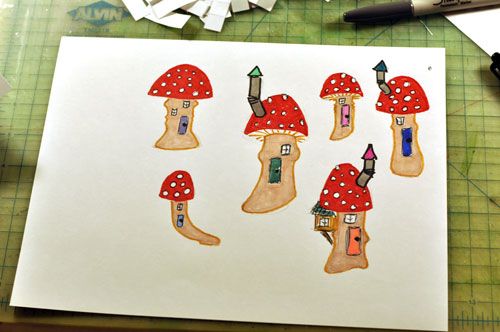
forest pop-up card

These are the square posts that will connect the platform to the tree. These posts determine the height of the platform. All following posts must conform to these original tree trunk posts. These are the only posts with four sides. Although as it turns out the forward facing sides were not used here, they could have contained upright forward-facing content and in that case then, one side is glued to the tree, another side glued to the background of the card, the top side used to build the platform and attach it to the tree, the fourth side to forward-facing content.

Notice the lightly penciled chevron design extending outward from the tree trunk.
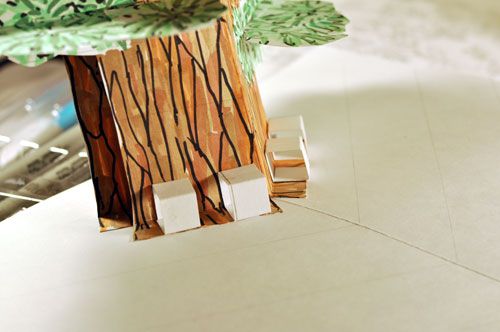
forest pop-up card

Two of these pages of plant life were needed to form the floating platform and to cover the background of the card. 
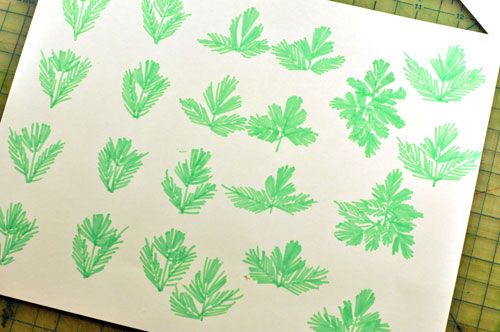
forest pop-up card

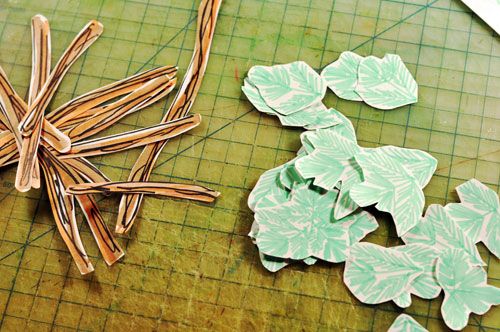
These are the paper sticks that connect the tabs at the top of the posts that both elevate the platform and present upright forward-facing content obediently conforming to the V of the tree trunk. You can see they are nothing more than random shapes and lengths. Some curve will be needed to connect the uppermost tabs of each post so most of the sticks are drawn and cut slightly curved one way or another. They will be mostly covered so there is no point in being precise about drawing the sticks. These were scratched out in less than one minute. 
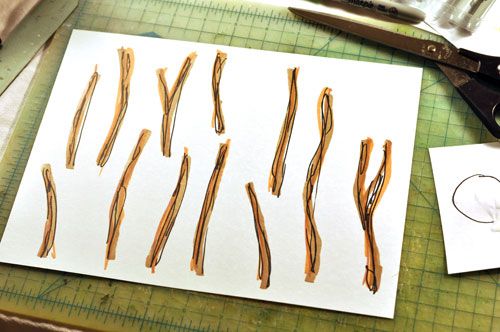
forest pop-up card

forest pop-up card

It looks like a mess at this point, but it's an organized mess! All of these upright pieces will be connected by their top tabs, here still flopping around but eventually forming a incomplete platform that is connected directly to the tree trunk.
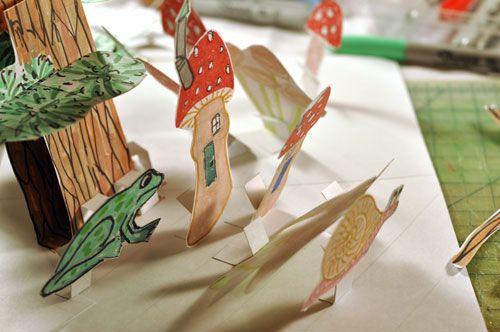
forest pop-up card

The remaining posts are all scored three-square rectangles. One side to attach to the card background, the middle square to present upright forward-facing content, the last top scored square to build a matrix of paper sticks upon which plants are glued and that is connected to the tree.

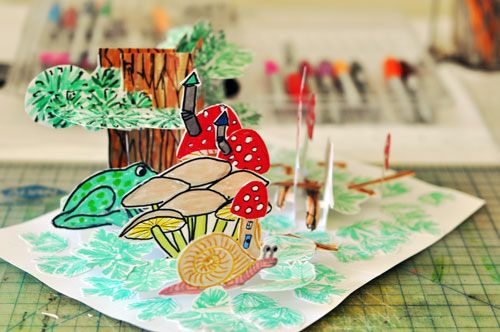
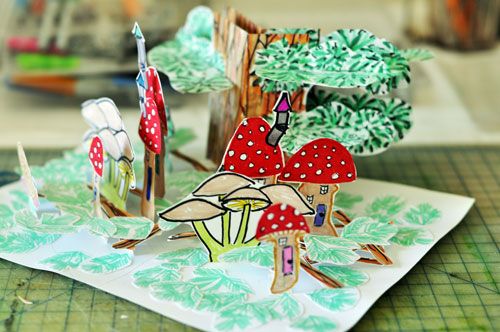
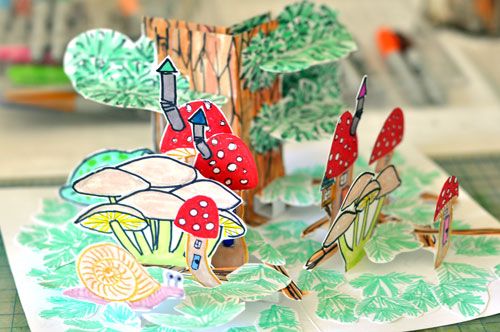
Finally, all the top tabs of the posts are connected with paper sticks and covered with plant life forming a platform conforming to the tree trunk. Extra plants are glued to the background to create two layers of plants.

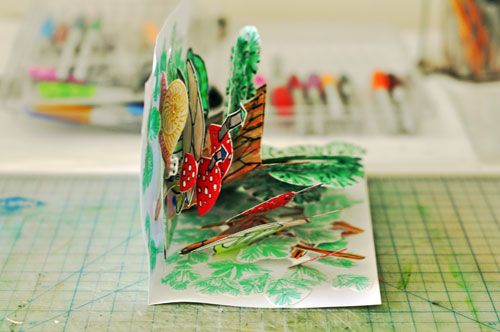
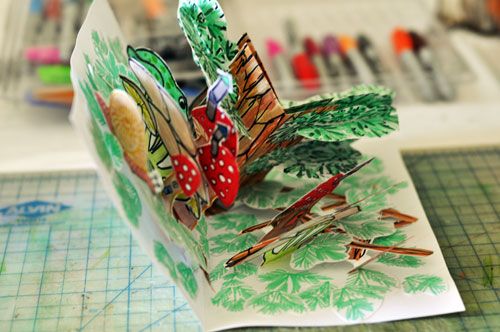
The card is seen to fold neatly and close as it should.
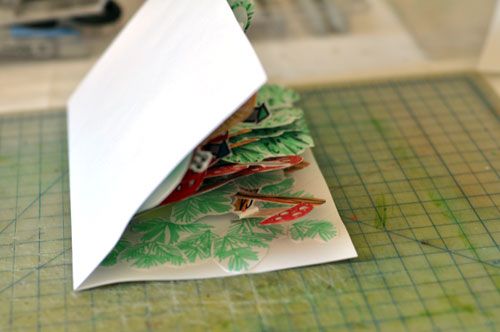
forest pop-up card

forest pop-up card


forest pop-up card

forest pop-up card

forest pop-up card

The backs of the forward-facing content is colored carelessly. I simply do not have the patience needed to carefully detail the backs of everything.
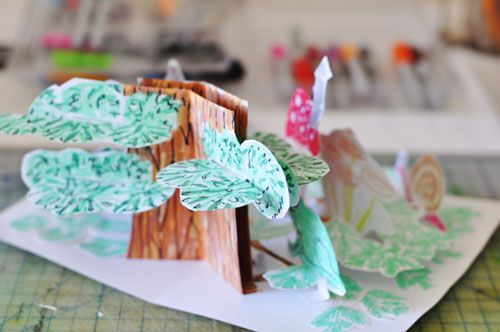
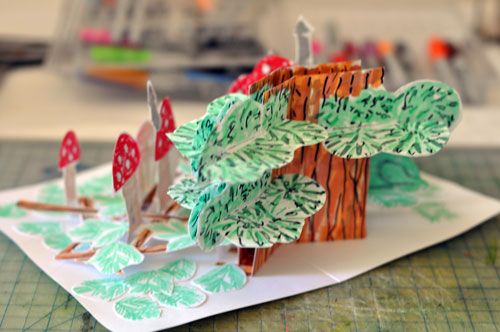
forest pop-up card

forest pop-up card

forest pop-up card

forest pop-up card

forest pop-up card

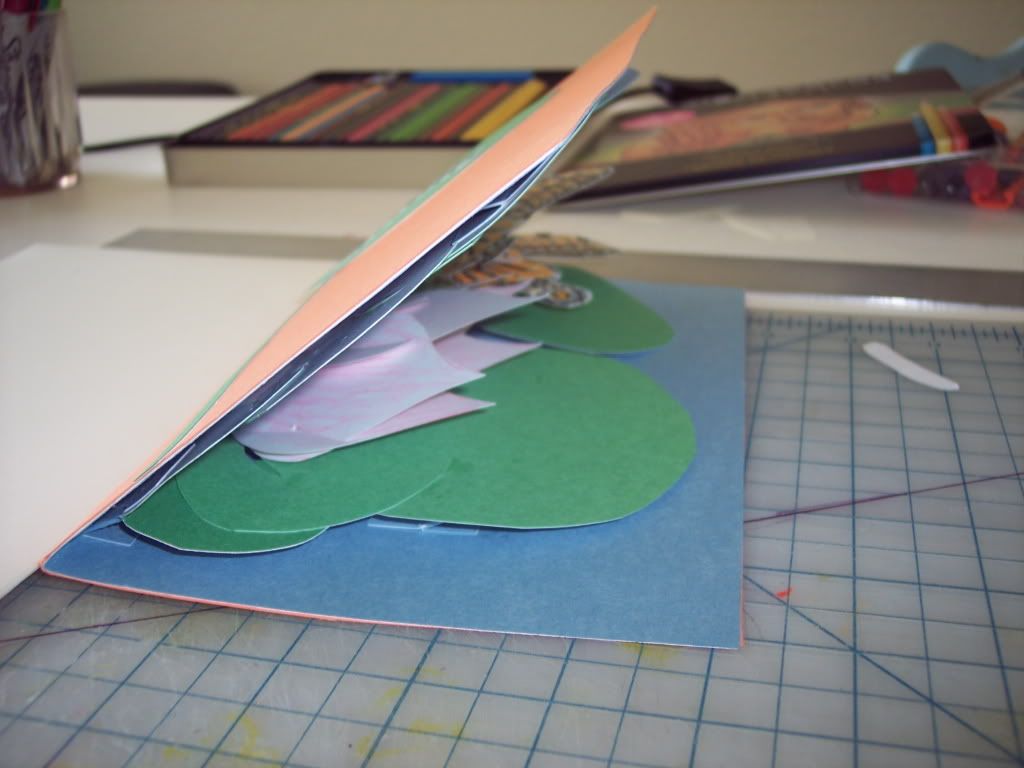
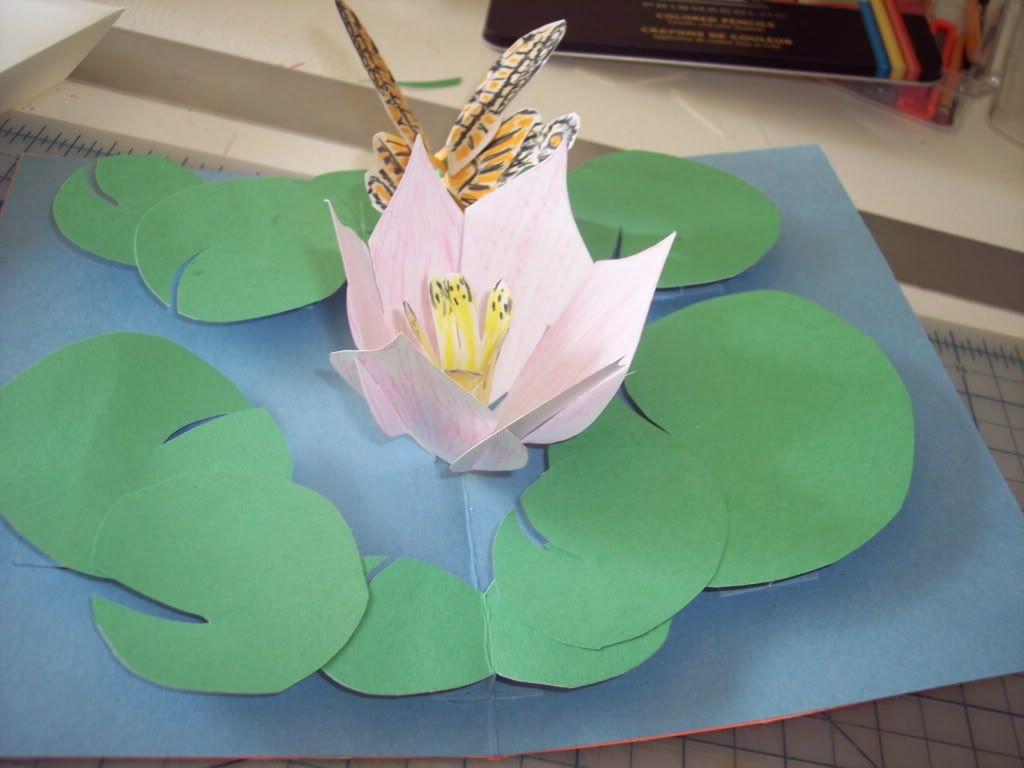
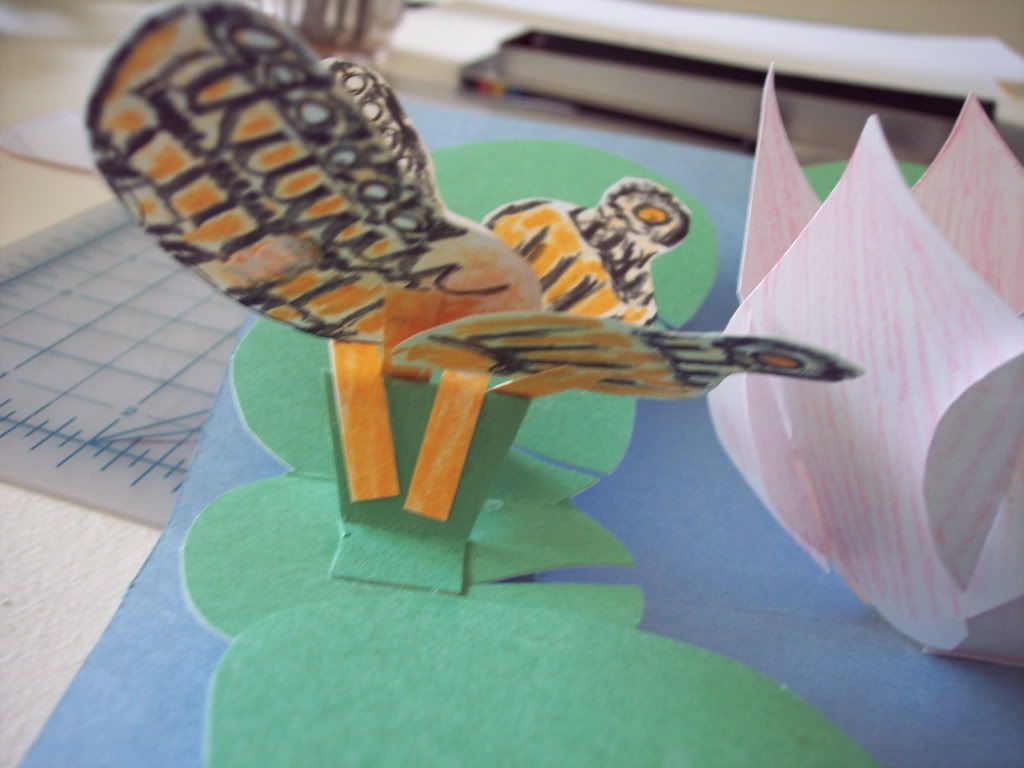
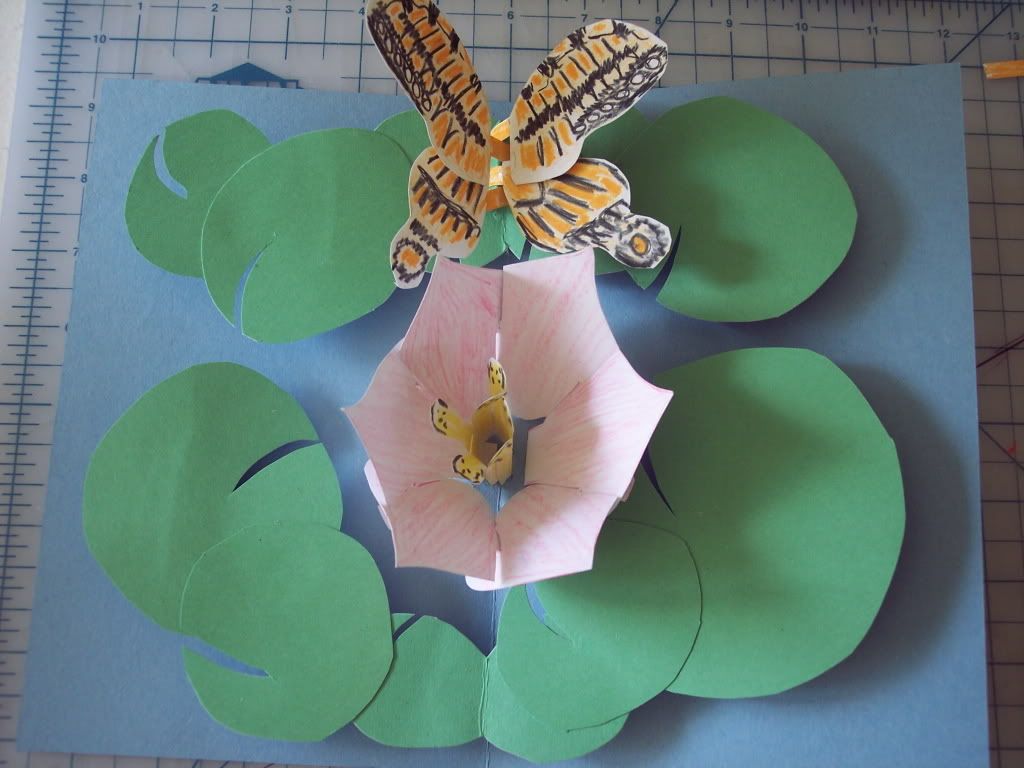
lotus butterfly pop-up card


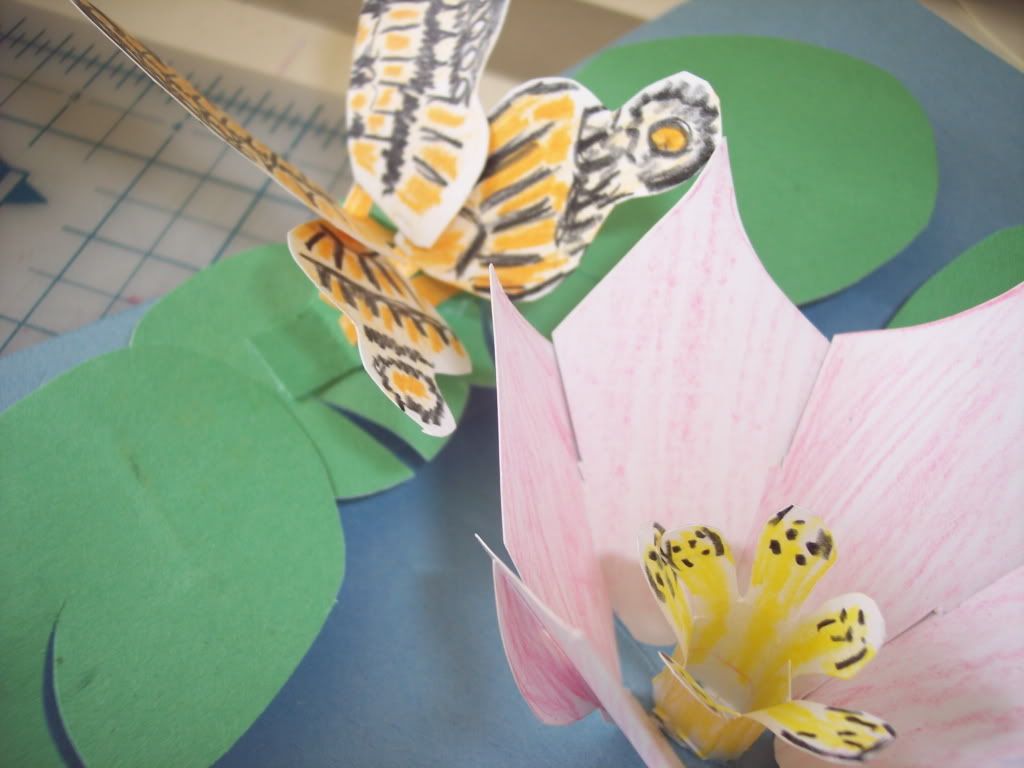
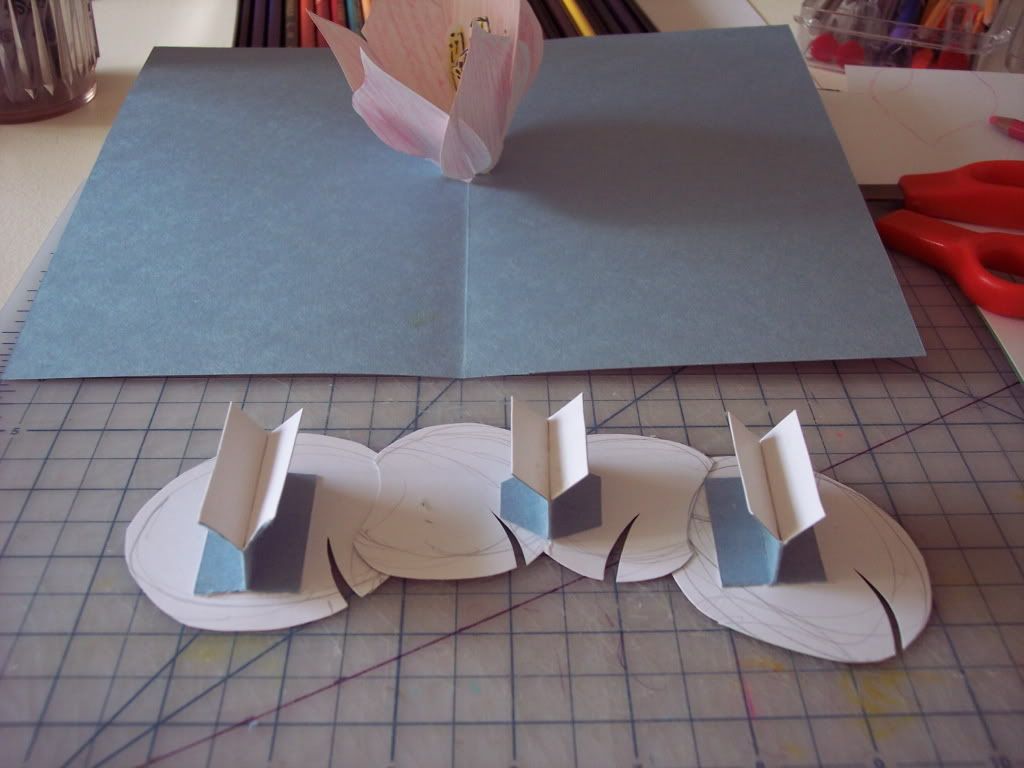
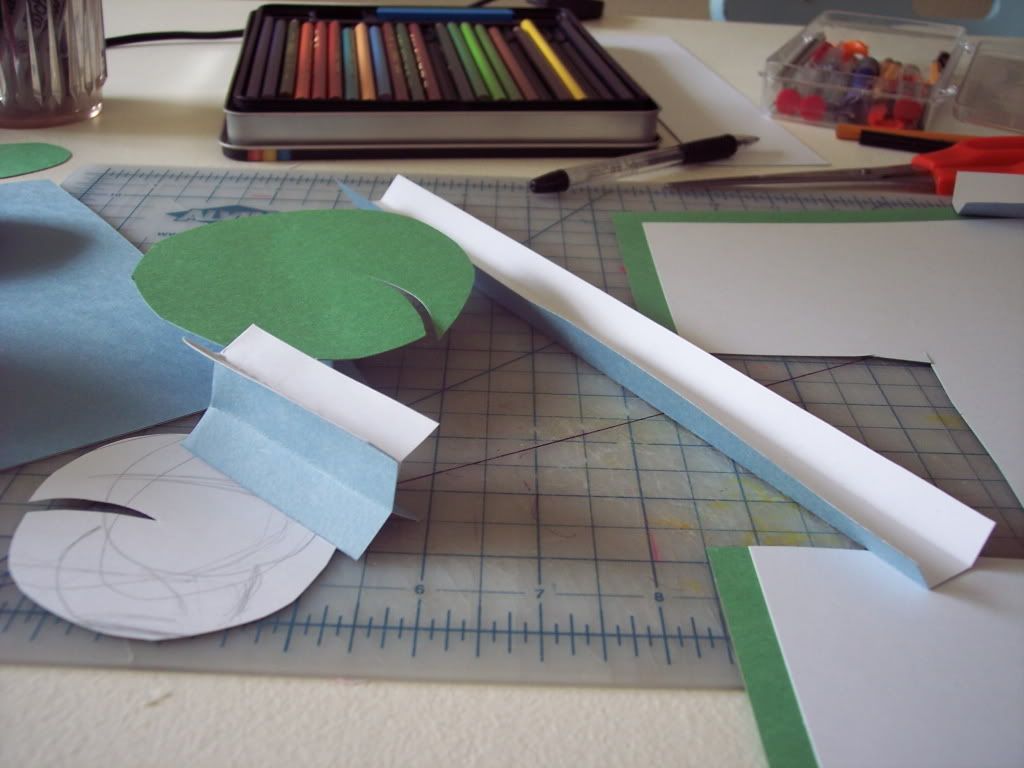
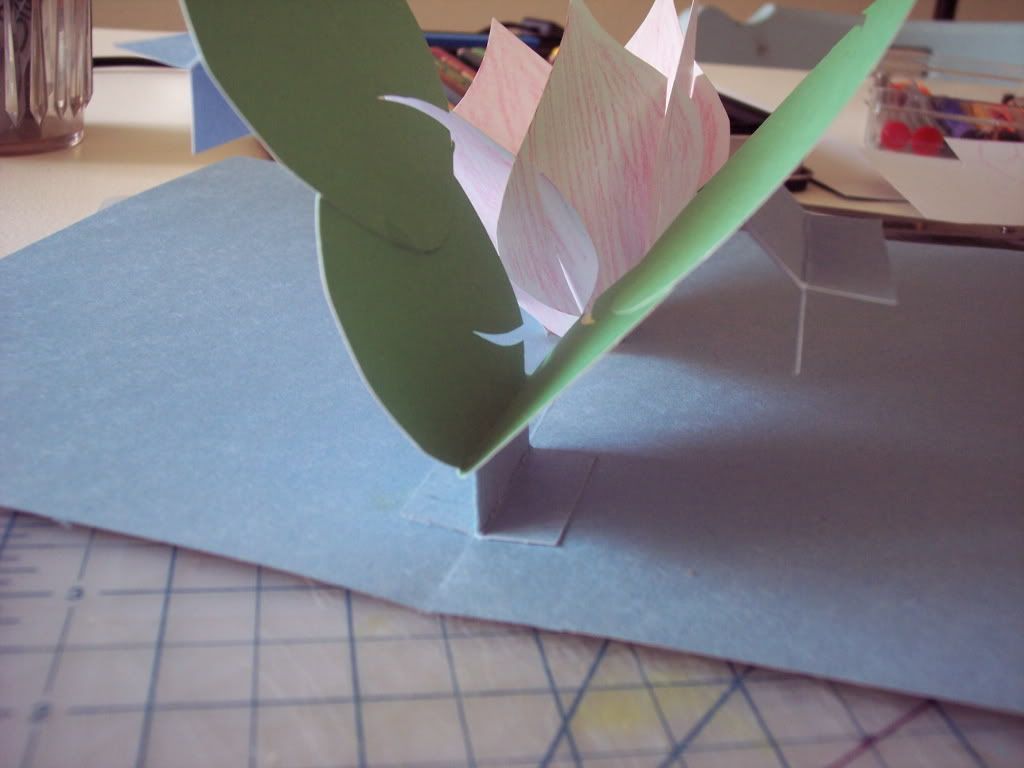
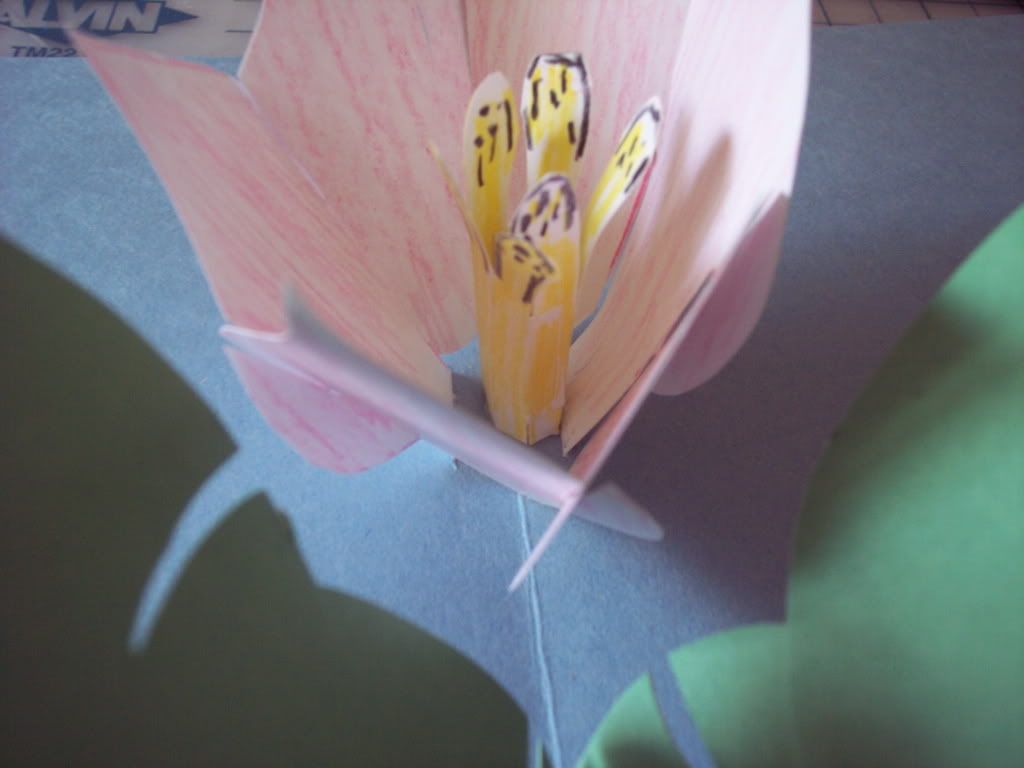
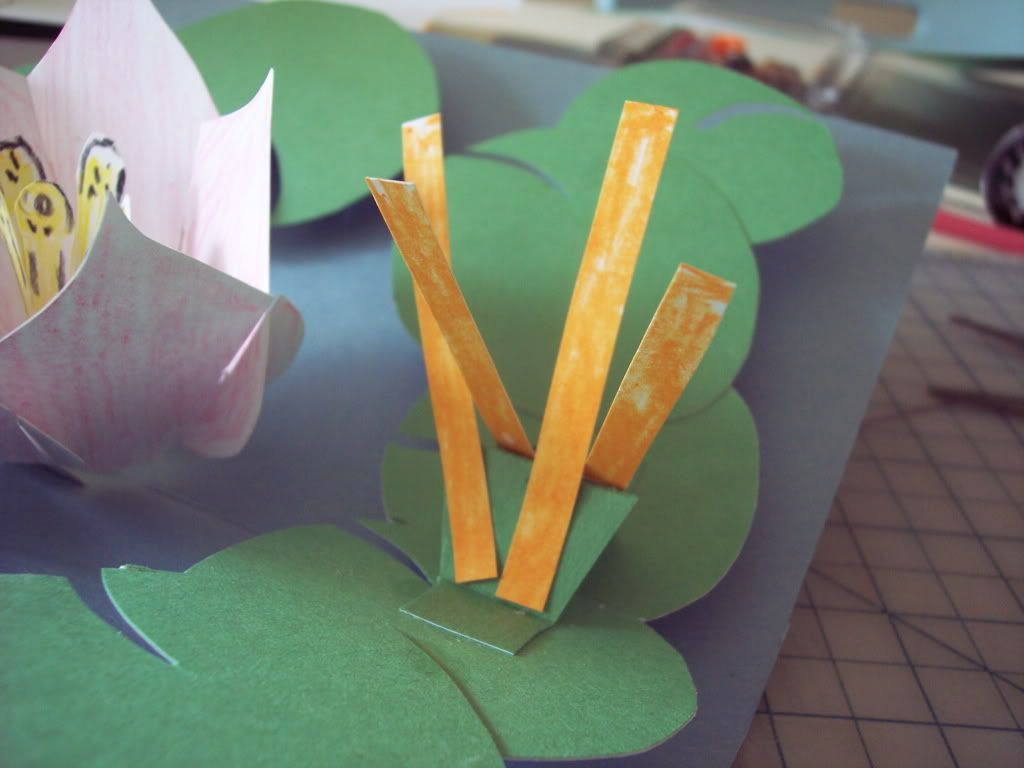
This was intended for a sympathy card. Metamorphosis and all that. It has three main pop-up mechanisms; lotus leaves on tables, lotus flower in hexagon pattern with two sides attached to the card, levered butterfly that opens its wings with the card. But the thing is, the lotus leaves are on two separate tables although they could just as easily been attached into one large table, and the lotus flower is two hexagonal patterns, one concentric to the other. So that's 5 total mechanisms, still, I think it manages to avoid being mechanically overloaded. The envelope has a little hand-drawn caterpillar sealing the flap.

The card has no words.


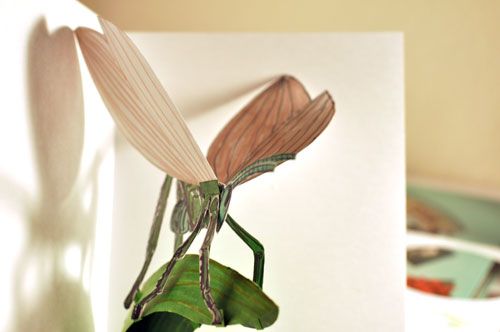
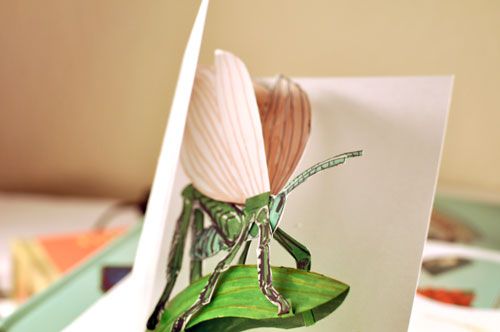
2nd page construction, grasshopper pop-up card


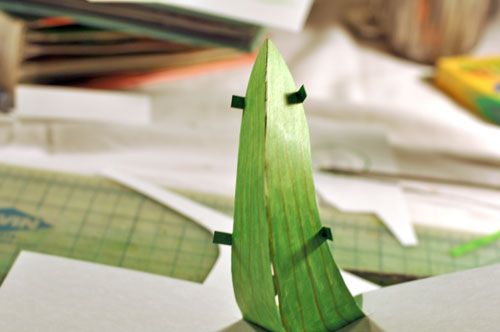
This leaf was not used ↑.  There are six such leaves of varying shapes and lengths. Only two were colored. 

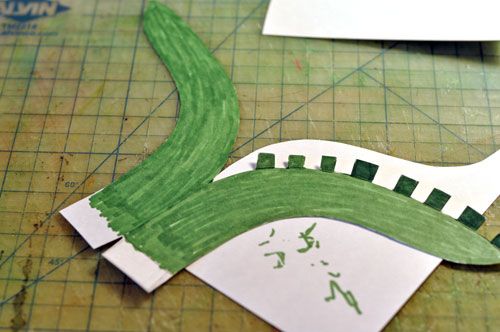
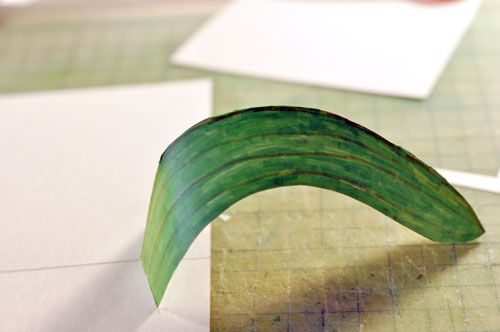
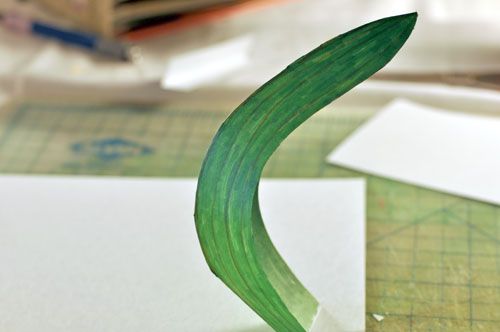
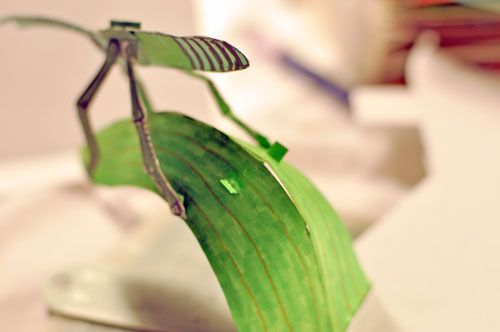
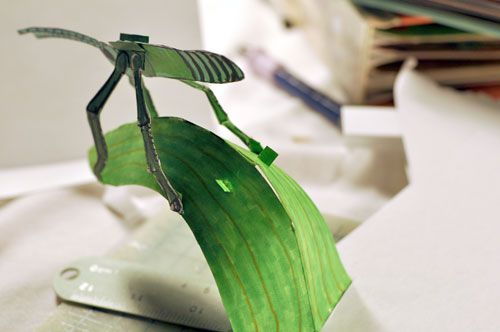
Finally I arrived at the shape I wanted ↓ that would flip the leaf off the card nearly entirely and at the right angle and still hold a grasshopper that would fit inside the card when it was closed. I went through quite a lot of card stock until I found the shape I was satisfied with. 


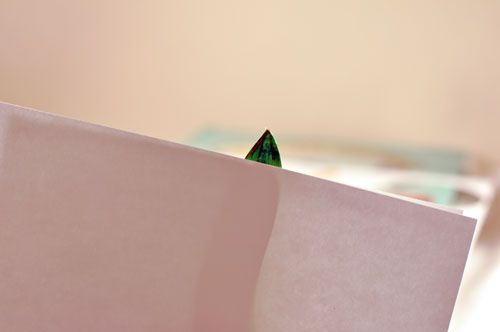
After all that, the tip still needed to be trimmed. 

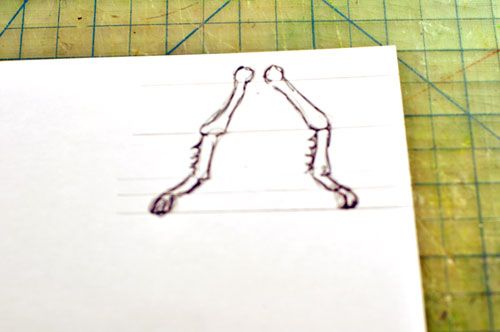
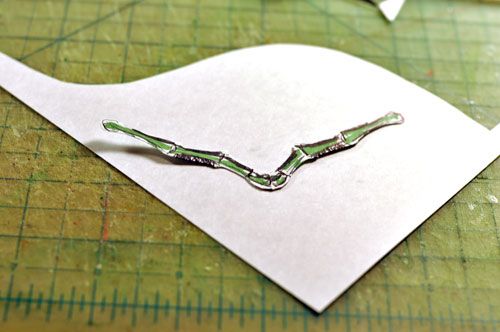
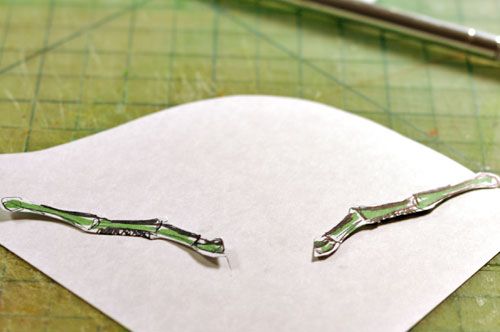
One side of front and middle legs. The card stock is doubled so all four legs are cut at once, two identical sets. They must be drawn and colored on each side so that's eight legs drawn and colored. This was done for three trials, so that's a lot of bug legs.


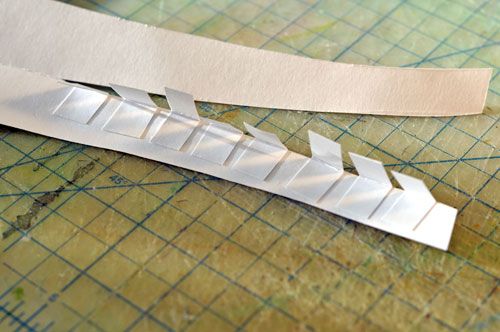
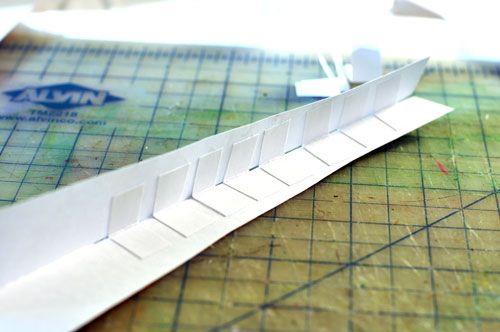
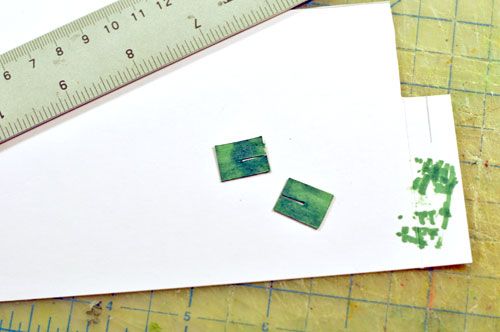
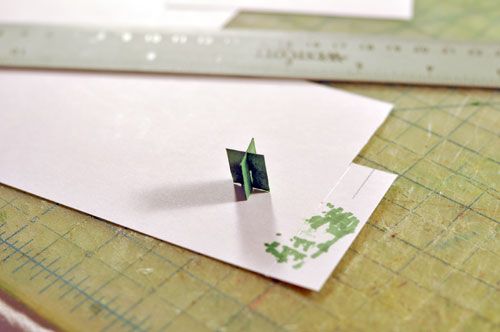
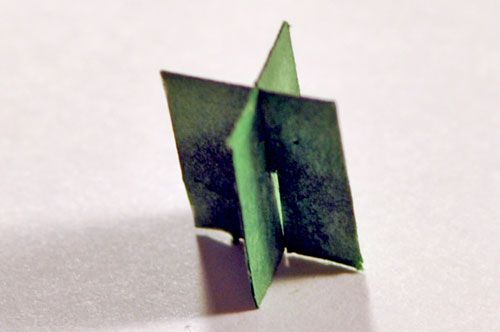
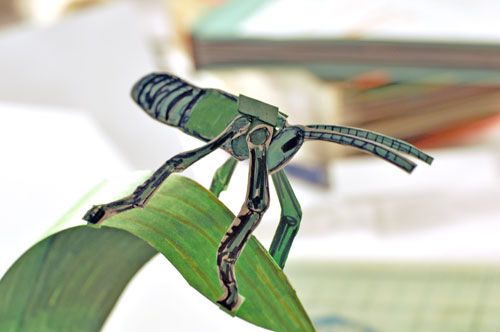
This is the key ↓ to what makes the legs work with the wings. It's a wonderful design with near limitless applications. It's one way to get butterfly wings to open with the card. 


A speck of glue holds on each leg. 
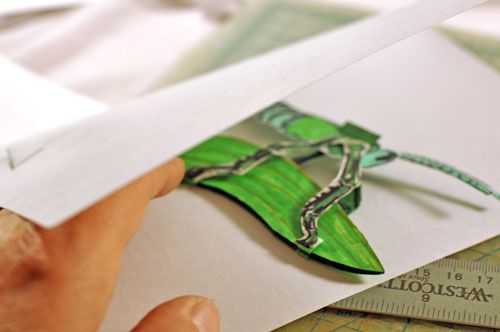
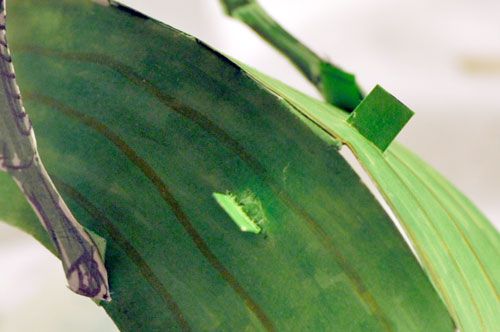
Once the legs are attached to the bug's body then the points on the leaf can be located and tiny tabs provided. 
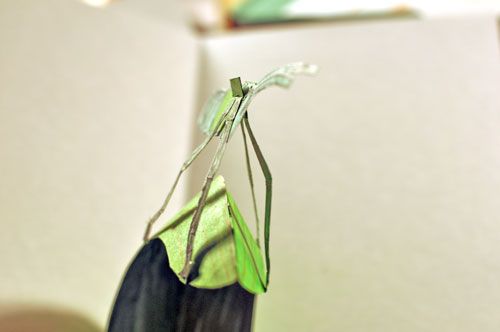


All four legs glued to the tabs ↑ in the card closed position. 


Fascinatin' init. 

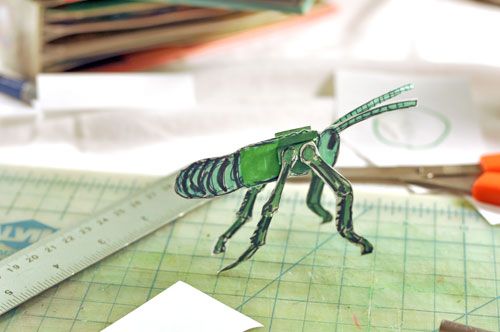
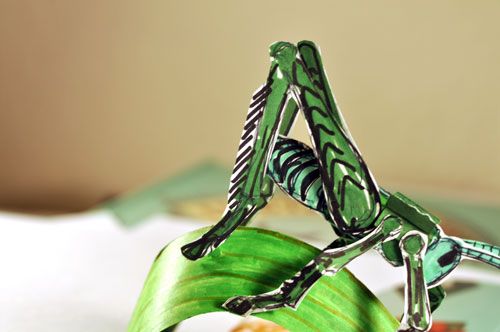
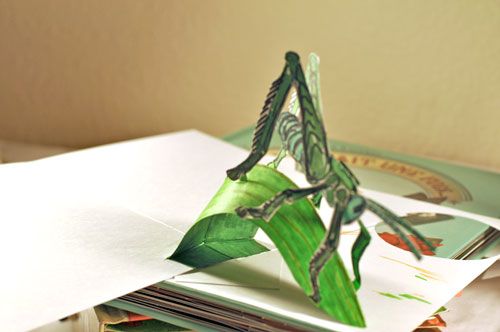
Now that the front four legs are attached to the bug and to the leaf, and the bug with its legs and its legs/wings mechanism  works with the leaf, then the hind legs can be attached. The hind legs aren't even drawn yet. They must not interfere with the wings that are yet to come. The hind legs are much larger than the front legs they are the distinguishing feature of grasshoppers. They can be drawn to be folded nearly shut as if ready to pounce or they can be drawn fully extended or anywhere in between. they can be attached to the leaf, or they can be provided with joints that actually work and be attached to the card, they can be parallel or they can be different as if the bug is having difficulty finding footholds. At any rate, their points of attachment are determined before the legs are drawn and colored and cut. 


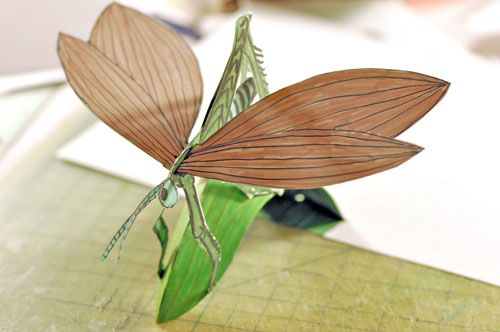
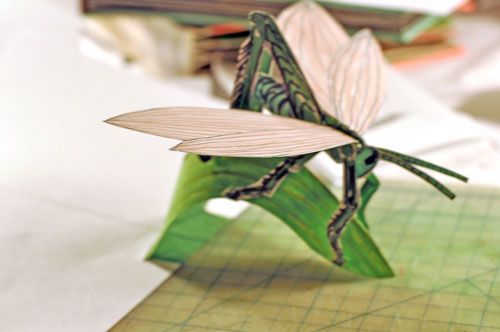
I debated on the weight of paper to use for the wings. I decided on heavier card stock to encourage them to flop down and help spread. I'm still not positive I made the right decision. The tiny X mechanism will be expected to force them closed. 


The wings must fit inside the card.